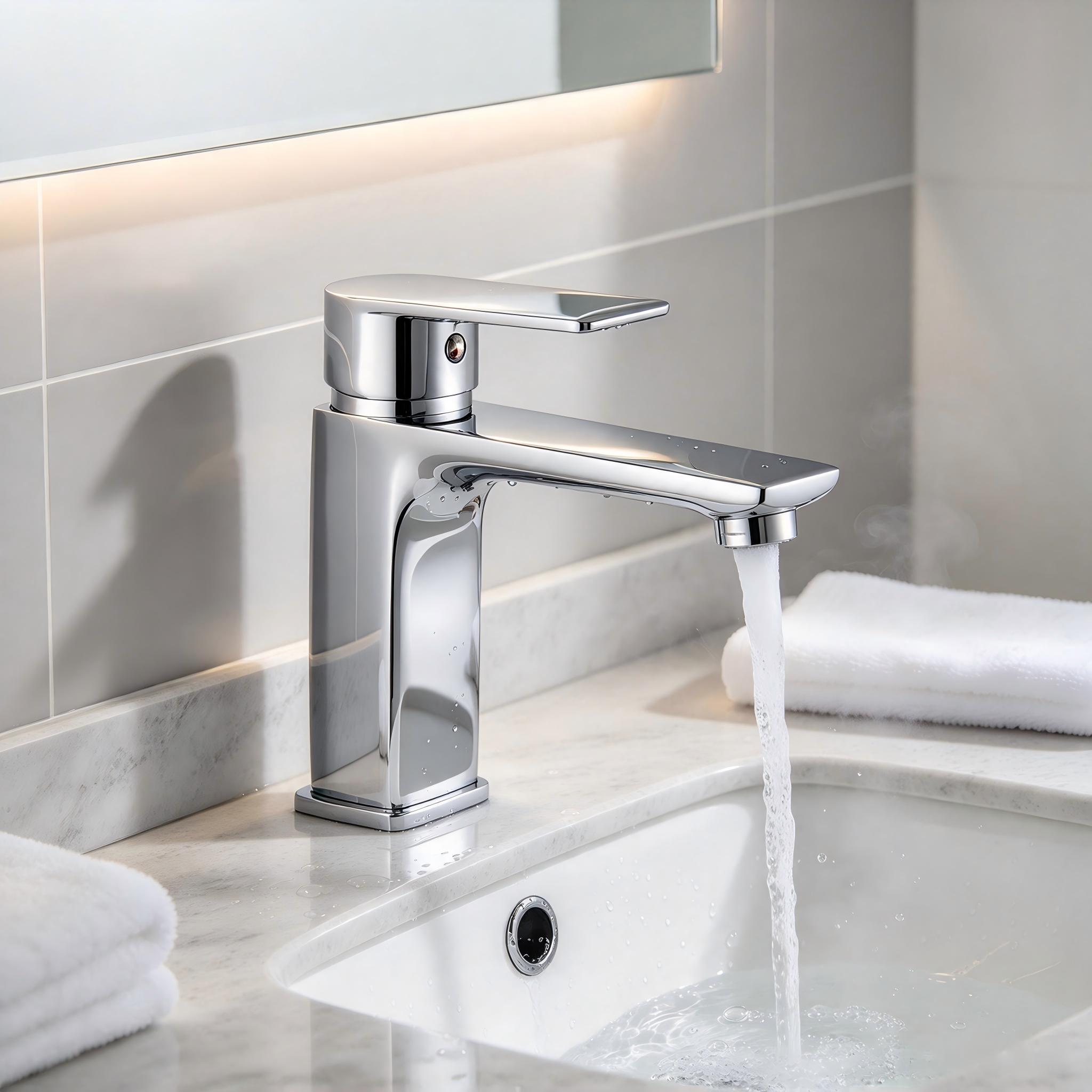
Faucet Product Introduction-Structure
1. Materials of the faucet
2. Structure of the faucet
3. Classification of the faucet
4. Accessories related to the faucet
The water tap is a colloquial term for the water spout. Water taps first appeared in the 16th century and were cast in bronze. Their main function was to control the water flow and the size of the water pipe. Early water taps were spiral spring-loaded, but now most water taps on the market use ceramic valve cores. Spiral spring-loaded taps are basically obsolete.
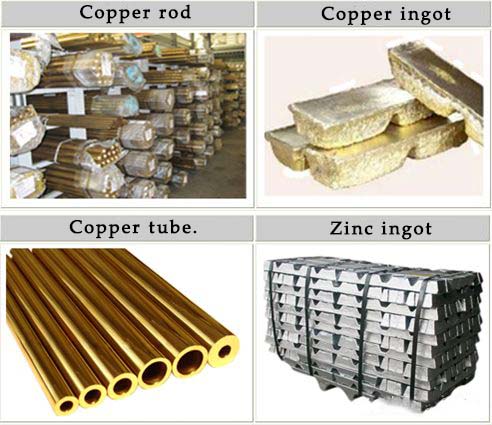
The main materials used for faucet bodies include cast iron, plastic, brass, ceramics, glass, jade, crystal, stainless steel, and alloy materials. Cast iron faucets have been phased out, while some low-end models are made of plastic and some special faucets are made of materials such as stainless steel. Some low-grade faucets have brass bodies and zinc alloy handles. Currently, most of the faucets sold on the market are made of brass. The brass used to manufacture faucets generally uses low-lead copper such as H59, H62, and H65, with a lead content of less than 2.5%, which is in line with the national standard GB/T1176 and is harmless to human health. Copper materials are primarily made from copper ingots and copper bars, with a small amount of copper pipes also used.
2. Structure of the faucet
The faucet consists of a body, a valve core, a handle, a water filter spout, an outlet, and installation components, etc. Some faucets also have a check valve, an aerator, a fixed bolt, a fixed copper plate, gaskets, bends, hoses, standard and non-standard interfaces, etc. Different faucets may have some differences.
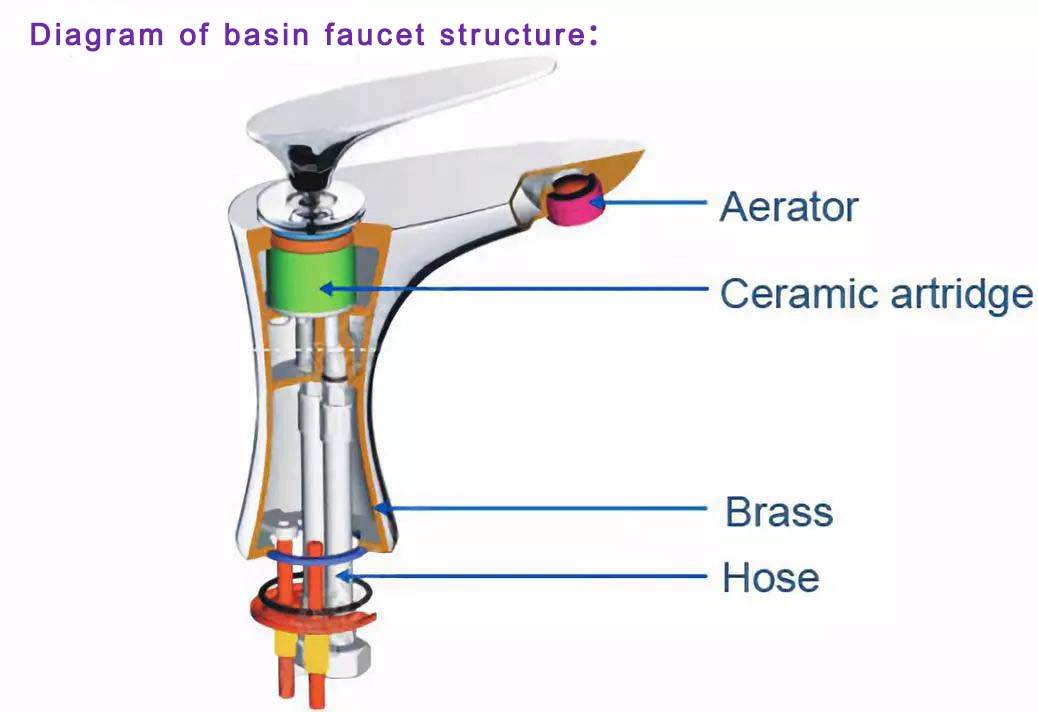
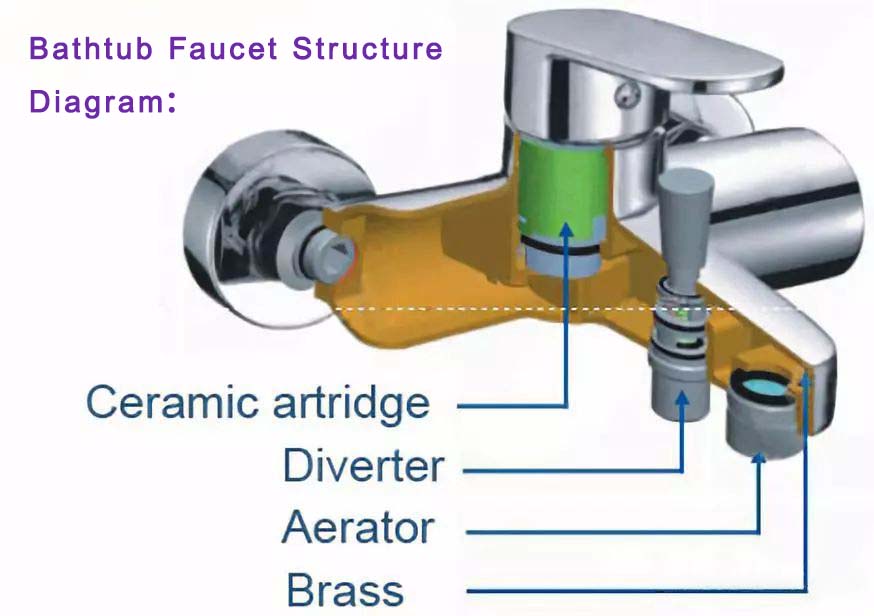
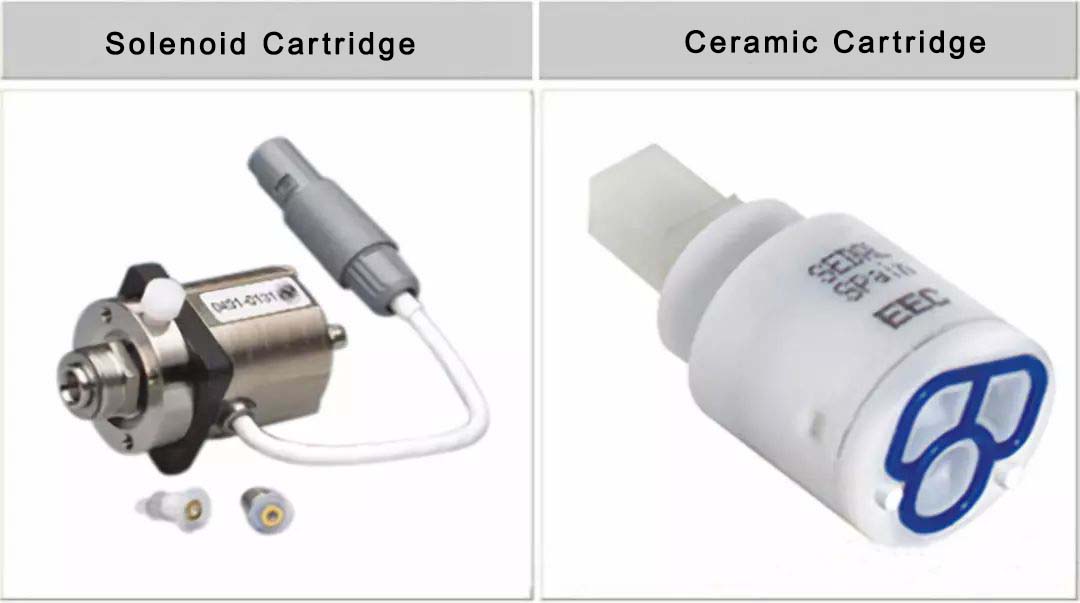
The core of a faucet is the Ceramic Disc Cartridge valve core. The valve core is the heart of the faucet, controlling the switch, flow rate, and the mixing ratio of hot and cold water. The quality of the valve core determines the reliability and service life of the faucet.
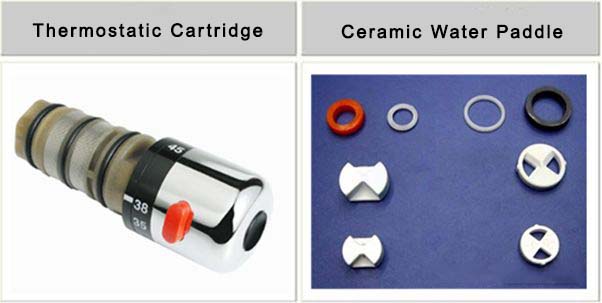
Valve cores for faucets can be divided into several types according to their materials, such as rubber valve cores, axle scroll valve cores, ceramic valve cores, and stainless steel ball valve cores. According to their functions, valve cores can be divided into manual valve cores, thermostatic valve cores, and electromagnetic induction valve cores.
Faucets using rubber cores are mostly spiral-opening cast iron faucets and have been largely replaced. Ceramic valve cores are a new generation of valve core materials with good sealing performance, stable physical performance, and a long service life. They are generally required to be able to open and close more than 300,000 times, which can last more than 20 years with no dripping if calculated at 30 times per day. Ceramic valve cores with five different diameters are available, including 25mm, 35mm, 40mm, 42mm, and 47mm. Famous ceramic valve core brands include Spain's Sedal, Hungary's Kerox, Germany's Fluesh, Italy's Hydroplast, and Japan's NTK. Thermostatic valve cores are mainly from France's Vernrt, while commonly used brands include Taiwan's Kang Qin, Ming Exhibition, Han You, and Zhuhai Ming Shi.
3. Classification of the faucet
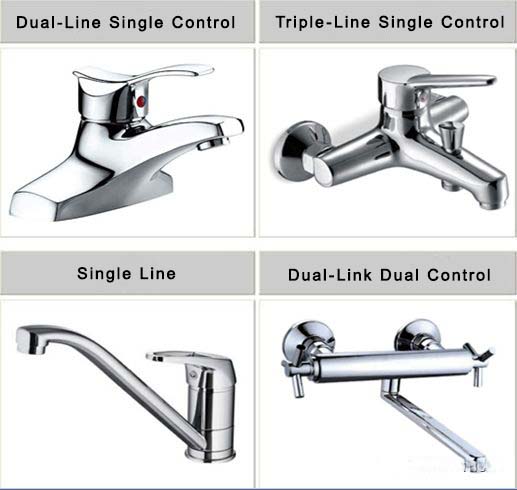
According to their structure, water faucets can be divided into several types, such as single-joint, double-joint, and triple-joint faucets. Single-joint faucets only have one inlet pipe and only connect to one water pipe, which can be either a hot water pipe or a cold water pipe. They are commonly used in kitchen faucets. Double-joint faucets can simultaneously connect to both hot and cold water pipes, and are often used in bathroom sinks and kitchen sinks with hot water supply. Triple-joint faucets, in addition to connecting to both hot and cold water pipes, can also connect to a shower head and are mainly used in bathtub faucets. Single-handle faucets can adjust the temperature of hot and cold water with one handle, while double-handle faucets require separate adjustments of the cold and hot water pipes to adjust the water temperature.
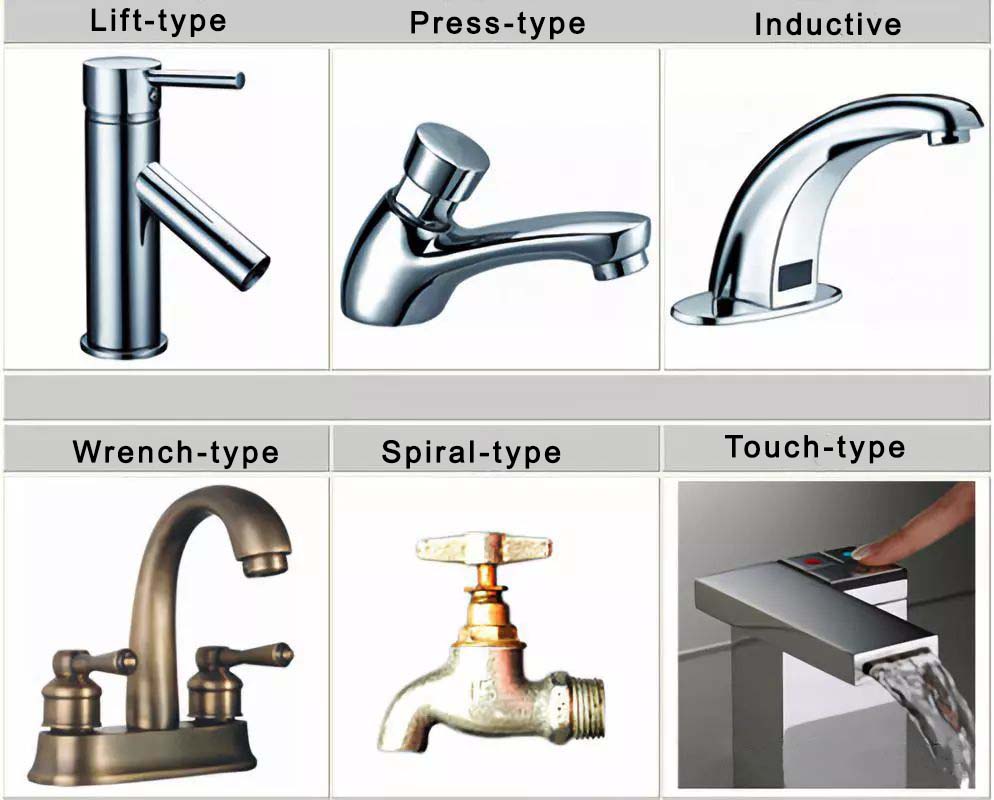
According to their opening methods, faucets can be categorized into spiral type, wrench type, lift type, press type, touch type, and sensor type. When opening a spiral handle faucet, it needs to be rotated multiple times; a wrench handle faucet only requires a 90-degree turn; a lift handle faucet only needs to be lifted up for the water to flow; a sensor faucet will automatically turn on when a hand is placed underneath. Additionally, there is also a type of faucet with a delay in closing, meaning that the water will continue to flow for a few seconds after the switch is turned off, allowing for any dirty residue on hands to be washed away. Sensor faucets utilize infrared sensing technology and can be powered by either alternating current (AC) – 220V/50Hz or AC110V/60Hz - or direct current (DC) with 4 D-cell batteries, providing a voltage of 6V.
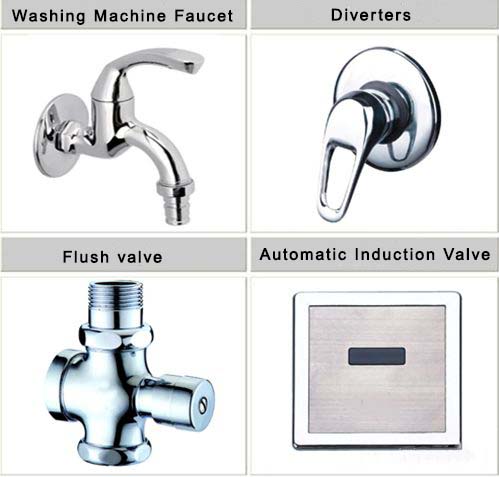
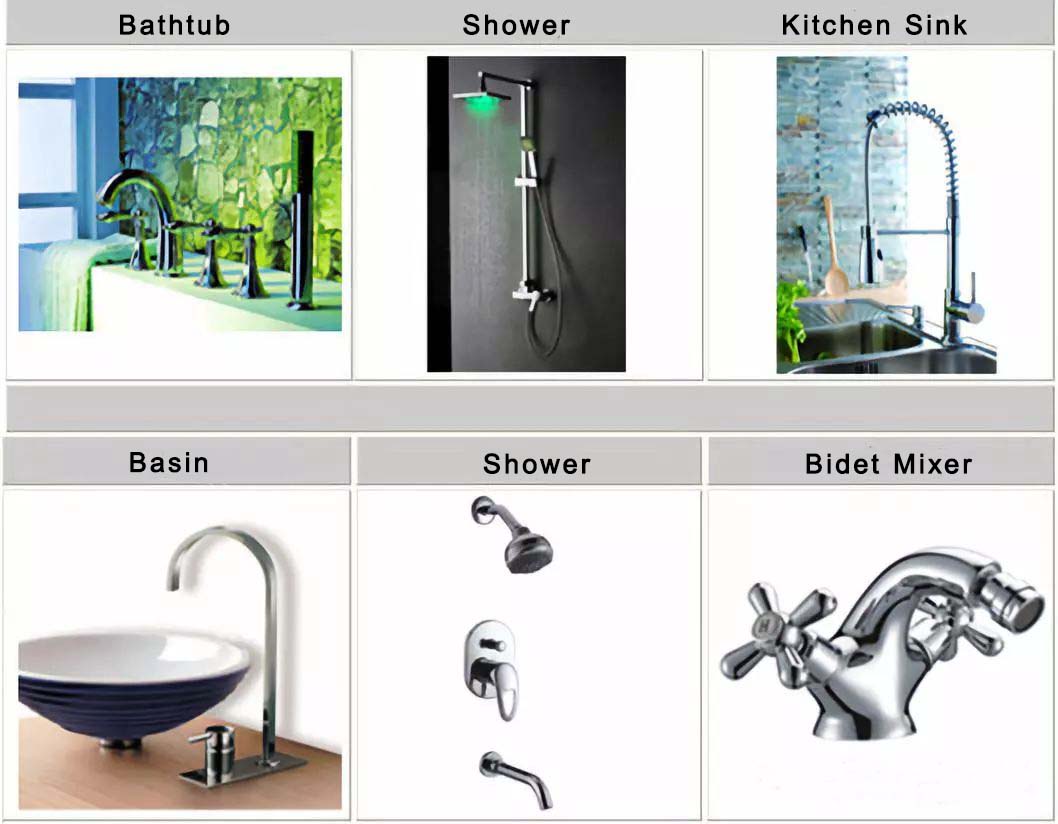
According to their functional use, faucets can be divided into basin faucets, bathtub faucets, shower faucets, kitchen sink faucets, bidet faucets, flush valves, sensor flush valves, outdoor faucets, and so on. Generally speaking, basin faucets have a lower and shorter water outlet, while kitchen faucets are usually long and rotatable, installed in the middle of two cleaning basins. The distance between the two inlet holes of a mixer shower faucet is generally 15CM+/-1CM, and some mixer shower faucets have a top spray and a handheld showerhead, as well as a bottom water outlet that facilitates water collection outside of the shower. The water outlet of a bidet faucet can rotate 360 degrees.
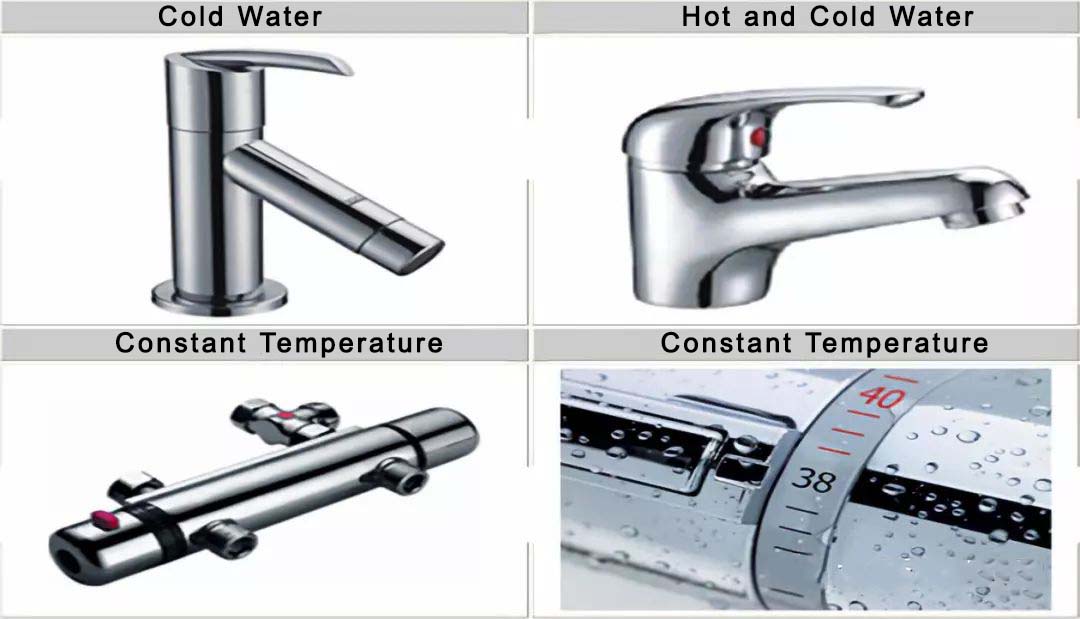
According to the temperature of the water, faucets can be divided into single cold faucets, cold and hot mixed faucets, and thermostatic faucets. Thermostatic faucets have a thermosensitive element installed at the outlet of the thermostatic valve core. By utilizing the characteristics of the temperature-sensitive element, the valve body and valve core move to block or open the inlet of the cold and hot water, ensuring that the outlet water temperature is always constant. Thermostatic faucets on the market mostly use memory alloy, paraffin, and pressure regulating valves to achieve thermostatic effects. There are certain requirements for the water pressure of thermostatic faucets, generally requiring 0.1-0.5 MP, and the pressure difference between cold and hot water cannot be too large. If the hot water pressure of the thermostatic faucet is less than 0.05, the thermostatic faucet is not applicable. The hot water temperature is generally required to be between 49-80 degrees, and the temperature adjusting knob can be set between 35℃-65℃. Thermostatic faucets are equipped with a safety button set at 38℃ to prevent scalding.
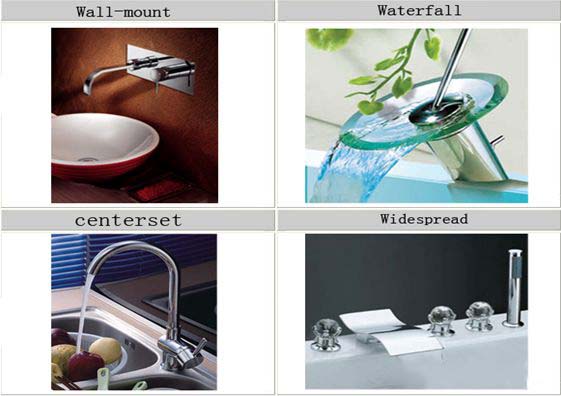
According to the installation structure, it can be divided into integral Centerset, separate Widespread, concealed Wall-mount and waterfall Waterfall.
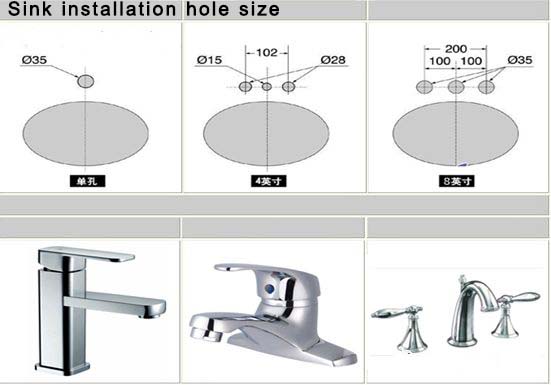
According to the size of the faucet installation hole spacing, washbasins can be divided into single-hole basin faucets, dual-hole 4-inch basin faucets, and three-hole 8-inch basin faucets. Single-hole basins can only be equipped with single-hole faucets. 4-inch basins are more common, and most faucets are also 4 inches, with the small hole in the middle used for installing the pull-out drain. 8-inch basins can be equipped with either 8-inch faucets or single-hole faucets. If an 8-inch basin is equipped with a single-hole faucet, the left and right holes can be covered with a cover plate.
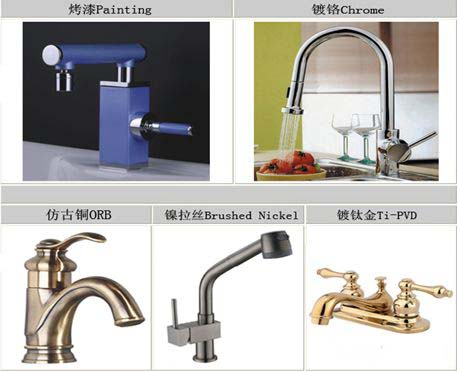
According to the surface treatment method, it can be divided into Chrome plating, Ti-PVD plating, ORB antique finish in Antique Brass, ORB antique finish in Antique Red Copper, Painting, Porcelain Enamel, Brushed Nickel, etc.
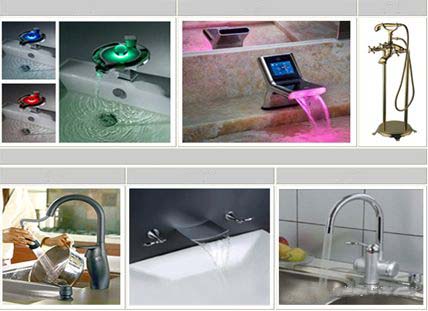
Other Categories, the other categories mainly include pull-down faucets (used mainly in kitchens), LED faucets (which can be further divided into three types: mono-color LED, seven-color LED, and temperature-sensitive color-changing LED, and can also be classified into two types: battery-powered and self-powered), waterfall faucets, floor-mounted faucets, electric hot-water faucets, smart faucets, glass faucets, ceramic faucets, spring faucets, and so on.
4. Accessories related to the faucet
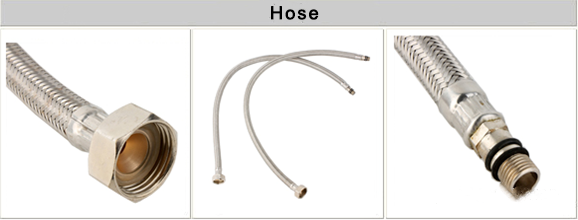
Accessories commonly sold in combination with faucets include drain strainers, handles with pull-out spouts, shower heads, flexible hoses, decorative covers, corner valves, tees, floor drains, bathroom fixtures, and more.
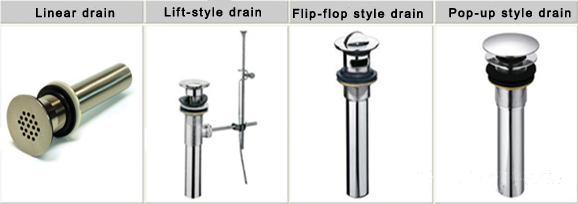
There are generally three types of pop-up for a sink basin: the lift-and turn style, the pop-up style and the flip lever style. The lift-and-turn stopper comes with a lifting rod that can be used to lift and turn the stopper without the need to get your hands wet. However, the pop-up and flip lever styles both require manual contact with the drain stopper.
The joint diameters are mainly divided into four types: 1/2", 3/8", 9/16", and 3/4". The 3/8" size is used in the German market, while in other countries, the 1/2" size is generally interchangeable.
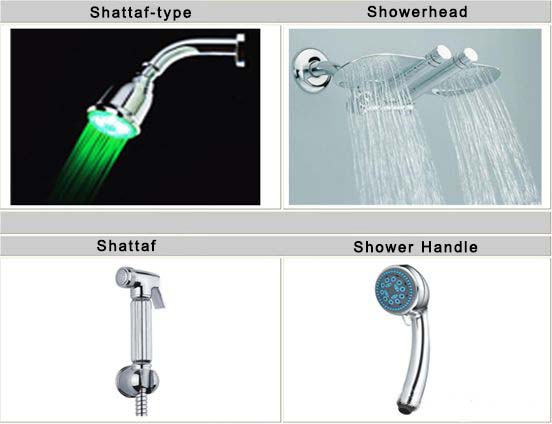
Showerheads can be classified in various ways. They can be divided into two main types: fixed and handheld. They can also be categorized as spray or rain-style showerheads, or as single-function or multifunction showerheads that offer massage water, mist water, shower water, foam water, mixed water, and so on.
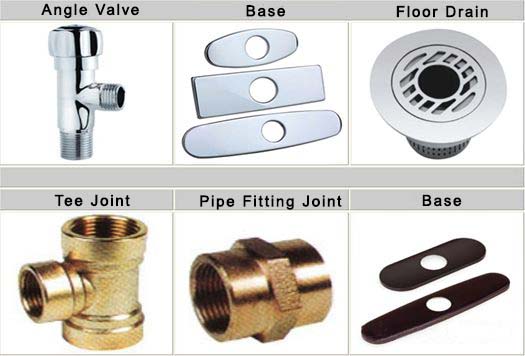
Other commonly used parts such as angle valves, elbows, reducers, tee joint, and other fittings are mainly used to solve problems with the inappropriate location or size of water faucets. Floor drains are primarily used for drainage and to prevent odors from rising from the sewage pipes into the interior. Decorative covers are mainly used to cover up extra holes when installing a single faucet in a double or triple hole sink.
Faucet Product Introduction-Production
The 134th China Import and Export Fair in Guangzhou in October 2023
Related Article