Faucet Product Introduction-Production
2. National standards and major international standards for faucets
3. Main brands and supply market of faucets
4. Selection and maintenance of faucets
1. Production process of faucet
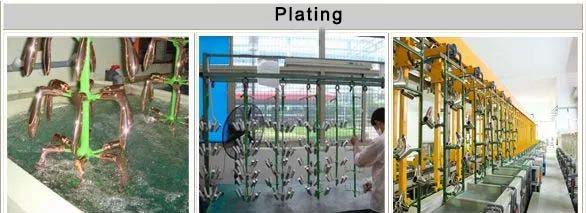
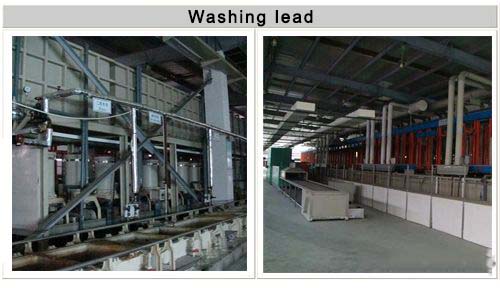
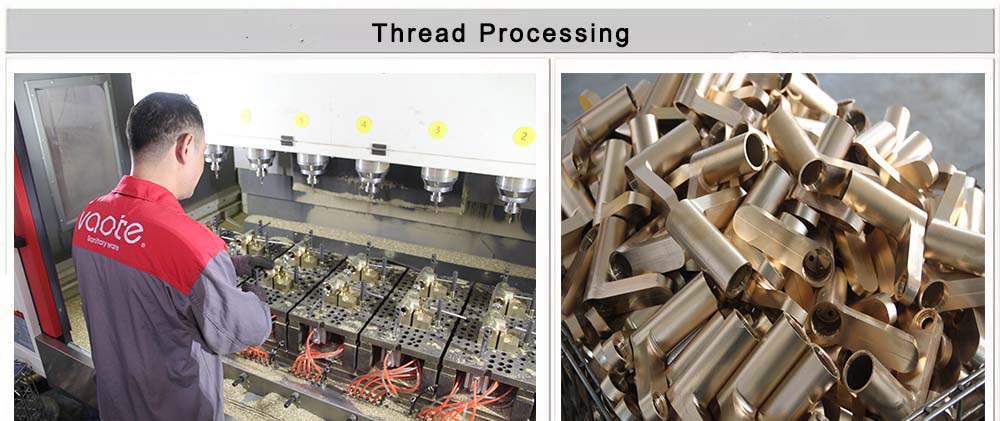
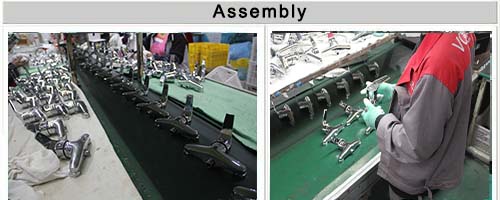
2. National standards and major international standards for faucets
I) Main certification standards:
① China's national standard for faucets is GB18145-2003 "Ceramic Disc Sealed Faucet", with main technical specifications identical to European standard EN817. Main contents include: material requirements, technical requirements, test methods, inspection rules.
② Europe: Currently there is no unified certification requirement, but there are general testing guidelines such as EN817 testing, EN200 testing, EN1111 testing, EN1287 testing. In addition, different countries have their own certifications, such as UK WRAS certification, TMV certification, French ACS certification, NF certification, German DVGW certification, Spanish AENOR certification, Dutch KIWA certification, Danish VA certification, MK certification, Swedish SITAC certification, P-marking certification, Italian DM174, Norwegian SINTEF certification, etc.;
③ United States: UPC certification, NSF certification, WQA certification, watersense certification, UL certification, 3A certification
④ Canada: CSA, and joint certifications recognized by Canada and the United States, such as ASME, cNSF, CUPC, etc.
⑤ Australia: WELS certification, watermark certification, this is a mandatory certification, requiring all faucets sold in Australia to have a "W" logo on the product body.
Since our main market is in Europe and America, it is necessary to understand the commonly used technical performance requirements for faucets in these markets. Below we take the example of the technical requirements for faucets in China, Europe, and North America to see what are the main technical indicators:
1) Main technical performance requirements for faucets in China and Europe For ceramic valve sealed faucets, except for noise requirements, the technical requirements for ceramic valve sealed faucets in China standard (GB18145) and European standard (EN817) are the same. The following is a summary of the above two standards for ceramic valve sealed faucets:
-
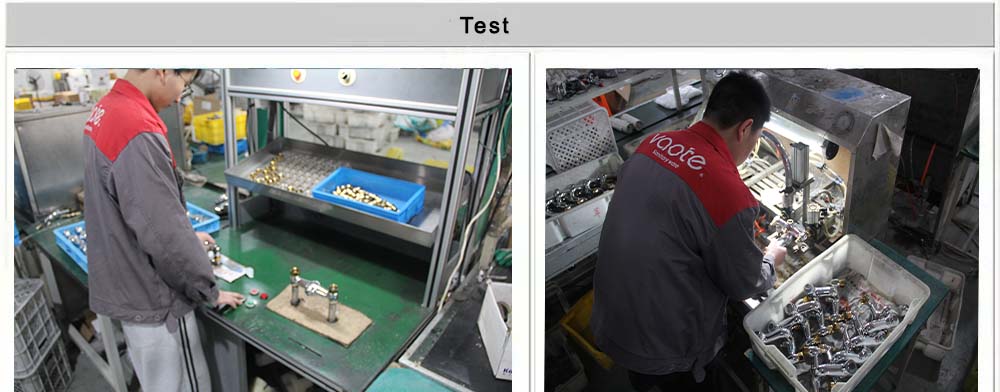
Sealing performance: The standard value is pressure of 1.6 MPa, kept for 60 seconds, with no deformation or leakage of the valve body, and the detection value is leakage
-
Coating: Electroplating - 24-hour acidic salt spray test, the standard value is 10 levels.
- Valve body strength: Inlet 2.5 MPa for 60 seconds / Outlet 0.4 MPa for 60 seconds.
- Flow rate test: The bathtub faucet has a flow rate greater than 20 liters/minute at a pressure of 0.3 MPa; The flow rate of the basin, body, shower and kitchen faucet under dynamic pressure of 0.1 MPa must be less than 9 liters/minute or the flow rate is not greater than 0.15 L/s.
- Life test: During the test, cold and hot water are supplied simultaneously, and the water supply dynamic pressure is 0.3 MPa.
- Single-handle double-control valve core: Life test for 70,000 times of triangular or rectangular actions;
- Life test for 200,000 times for single-handle single-control and double-handle double-control valve cores;
- Swinging outlet for 80,000 times of life test;
- Water distributor for 30,000 times of life test;
Cold and hot cycle test: First complete the following three cycles: -20℃ 12h, 95℃ 12h, and then complete the following test of 450 cycles: 80℃ for 40s, normal temperature water for 40s.
- Noise test at a dynamic pressure of 0.3 MPa.
- Torque test: (1) Strength test of the connection fittings; (2) Test of opening force of the valve core.
- The warranty period for faucets is generally five years.
2) Main technical performance requirements for faucets in North America
-
Cross-flow (cold and hot water inter-wall sealing test);
-
Coating: Electroplating - salt spray test.
-
Dynamic sealing: (1) tested with 1.4Kgf/cm² dynamic pressure, 10℃ cold water, for 5 minutes
- Burst pressure: (1) Terminal devices such as faucets: Close the valve core and test for 1 minute under a pressure of 500 PSI;
(2) Water supply pipeline: Block the water outlet and test for 1 minute under a pressure of 500 PSI;
(3) Hose assembly: Test for 1 hour under a pressure of 100 PSI, and then test for 1 minute under a pressure of 290 PSI;
(4) Ball joint: Test under a dynamic pressure of 50 PSI, and the leakage amount should not exceed 50ml/min.
- Flow rate test: (1) Minimum flow rate tested at 0.14MPa (20PSI);
(2) Maximum flow rate tested at 0.41MPa pressure;
(3) Maximum flow rate of the shower head tested at 38℃ hot water and 0.55MPa pressure.
- Life test: Frequency of 1500 times per hour, alternating supply of cold and hot water during the test, and water supply dynamic pressure of 50 PSI. The following products need to be life tested: (1) Valve core; (2) Swinging outlet; (3) Shower head, spray gun body, and handheld showerhead; (4) Water distributor.
- Shower pipe, pull-out pipe: (1) 10,000 times pulling force life test: gradually apply a pulling force of 67N to the end of the hose, then reduce to 0N, and then increase to 67N again; (2) Tension test: 334N for 15 seconds.
- Torque test: (1) Strength test of the connection fittings; (2) Test of opening force of the valve core.
- Backflow test: Backflow test is required for devices with water outlet devices that can submerge in water (such as pull-out faucet sprayers).
Vaote at the Canton Fair
Faucet Product Introduction-Structure
Related Article