
The Evolution History of Chinese Faucet
2023-07-24
China has a long history of faucet development, dating back to the ancient times when bamboo or earthenware were With the advent of bronze and iron tools, faucet making gradually became more sophisticated.

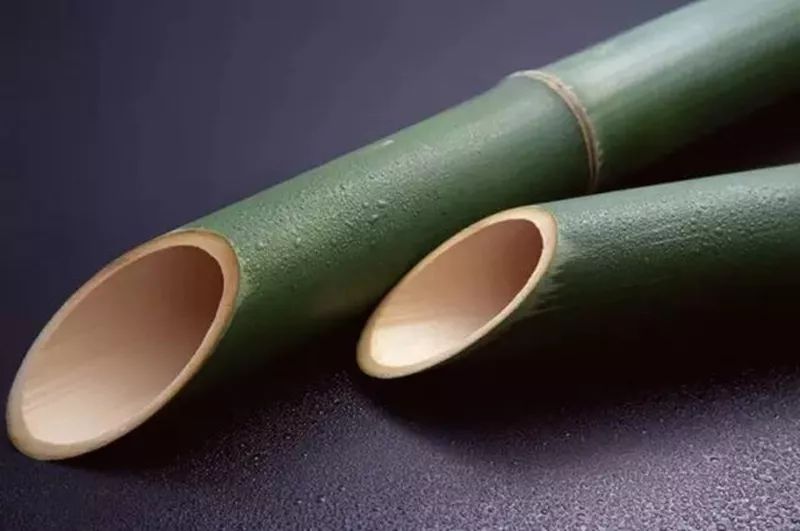

As far as the earliest water tap in the world is concerned, there are no clear records in the current historical data, but in ancient Chinese folk, people would open up bamboos and connect them one by one to draw water from rivers or mountain springs for people to use. It is regarded as the origin of the ancient dragon head.


Juchao has been used as early as the Spring and Autumn Period and the Warring States Period. In fact, it is a water-lifting device that uses the principle of leverage.
It is to support a wooden frame next to the well, and install a strong wooden pole on the wooden frame. The wooden frame divides the wooden pole into a short end and a long end. The short end is tied with a wooden barrel, and a stone falls from the long end. When the bucket lifts up the water, due to the effect of the lever and the falling stone, it saves effort.


The structure of the orange is equivalent to an ordinary lever. In the middle of its long horizontal bar, it is supported or suspended by vertical wood. One end of the horizontal bar is connected with the dipper with a straight bar, and a heavy stone is tied or suspended at the other end.
When not drawing water, the position of the stone is low (potential energy is also small); when drawing water, the person presses the straight rod and the dipper down hard, and at the same time, the position of the stone at the other end rises (potential energy Increase).
When the drainer is full, the other end of the stone is lowered, and the potential energy stored in the stone is transformed: through leverage, the drainer may be lifted. Like this, the main force direction of drawing water process is downward. Since the downward force can use the weight of the person, it gives people a relaxed feeling and greatly reduces the fatigue of people lifting water.


The waterwheel is an ancient tool for carrying water for irrigation. The water wheel is also called the sky wheel. It is more than 10 meters high. It is supported by a 5-meter-long and 0.5-meter-diameter axle with 24 wooden spokes, which spread out radially. Each spoke has a scraper and water bucket on top of it.
The scraper scrapes water, and the water bucket is filled with water. The river rushes in, and the spokes are slowly turned by the inertia of the water, and the buckets are filled with river water and lifted up step by step. Near the top, the water bucket is naturally inclined to pour water into the aqueduct and flow into the irrigated farmland.
Today, although waterwheels have been replaced by more advanced irrigation equipment, waterwheels can still be used in some backward areas and specific workplaces. At the same time, the waterwheel has also become a cultural symbol and a tourist attraction. In some historic cities and villages, tourists can see the exquisite waterwheel architecture and demonstrate the use of this ancient tool.

During the Tang (618-907) and Song (960-1279) dynasties, faucets made of bronze were widely used in nobility's households. Some of these faucets had dragon-shaped heads, symbolizing good fortune.
The continuous improvement of water fetching tools has also been applied to fire protection. Fire is one of the greatest hazards to human safety and survival, so people invented and used fire-fighting tools a long time ago, and water bags and pumps are original fire-fighting tools.
In the early Qing Dynasty, a kind of Japanese fire-fighting equipment was introduced to Shanghai, which was actually a kind of artificial water pump. This kind of water pump can spray water much more than water bags and pumps, and can spray water continuously. It is a bit like a dragon that can spray water in the sky, so it is called "water dragon", and the belt that catches water is called "water dragon". "Water hose", the sprinkler head is called "faucet", hereinafter referred to as "faucet".


In the Ming (1368-1644) and Qing (1644-1911) dynasties, faucet manufacturing techniques improved significantly, with the use of brass, copper and iron as materials. Faucets also became more ornate, featuring intricate engravings and carvings.In the early Qing Dynasty, a kind of Japanese fire-fighting equipment was introduced to Shanghai, which was actually a kind of artificial water pump. This kind of water pump can spray water much more than water bags and pumps, and can spray water continuously. It is a bit like a dragon that can spray water in the sky, so it is called "water dragon", and the belt that catches water is called "water dragon". "Water hose", the sprinkler head is called "faucet", hereinafter referred to as "faucet"


In the middle of the 18th century, in the Western Garden of Emperor Qianlong’s Old Summer Palace, the faucet of the 12 zodiac signs designed by the European painter Castiglione was placed in the center of the garden and sprayed water in turn every two hours. This is the prototype of the Chinese faucet. Later, faucets were engraved wherever there was a water outlet, and water flowed out of the dragon's mouth, hence the name of the faucet.
In the early 20th century, Western-style faucets were introduced to China, featuring a single handle and a spout.
However, they were mainly used in foreign settlements and were not widely adopted by the Chinese population.
After the founding of the People's Republic of China in 1949, the government prioritized developing the country's infrastructure, including water supply and sanitation systems.
This led to the emergence of a large number of domestic faucet manufacturers, who produced both traditional and modern styles of faucets.
In recent years, with the rapid development of technology and the growing emphasis on energy conservation and environmental protection, new types of faucets have emerged, such as automatic sensors, thermostatic faucets, and water-saving faucets.
Today, Chinese faucets are known for their durability, wide variety of styles and affordable prices, and are exported to many countries around the world.
Faucet Body Accessories
The past and present lives of the faucet that you don't know about.
Related Article

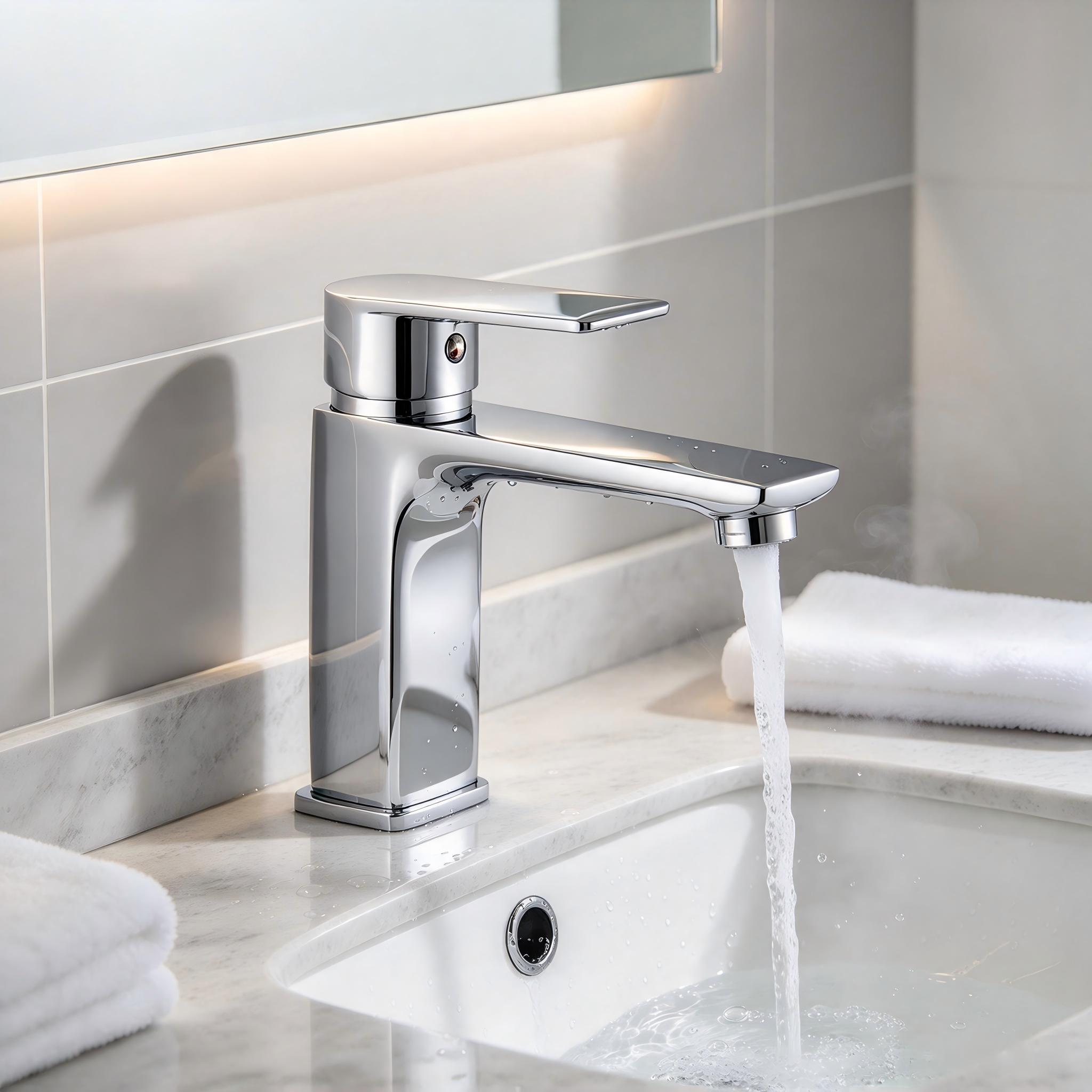
This bathroom faucet set boasts an exquisite, elegant look. Adopting one-piece casting construction, its surface is precision-machined for a perfectly smooth finish. The premium electroplated layer greatly enhances corrosion resistance and extends service life.
Premium Bathroom Faucet Set

Vaote has rich experience in faucet manufacture and commited to bathroom and kitchen faucets. We welcome customers with innovative ideas and purchasing needs to exchange ideas with us. Together, we provide convenient, high-quality faucet products for every household.
HALL B BOOTH NO 10.1K37 AT 140TH CANTON FAIR